Meet Sam Kamali in A Journey into the UGHE’s Inaugural MBBS–MGHD Program
January 24, 2026 2026-01-24 12:41Meet Sam Kamali in A Journey into the UGHE’s Inaugural MBBS–MGHD Program
Meet Sam Kamali in A Journey into the UGHE’s Inaugural MBBS–MGHD Program
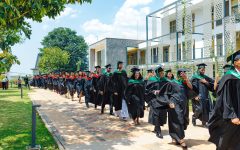
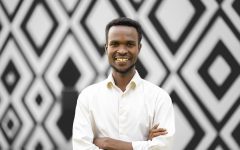
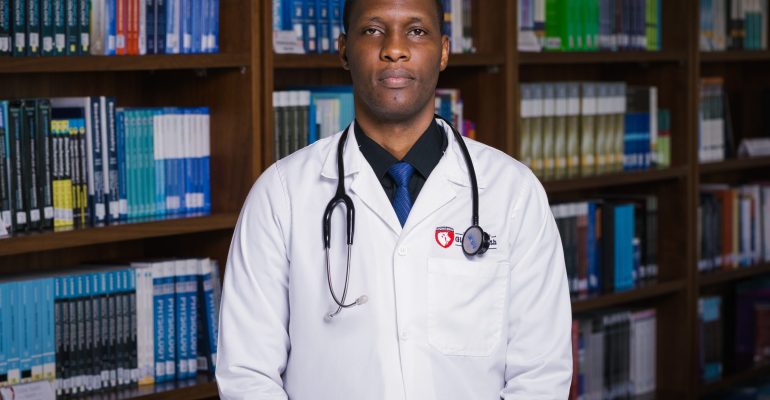
As the University of Global Health Equity marks 10 years of impact, we celebrate a historic milestone: the graduation of the inaugural MBBS–MGHD class. In this Q&A, we speak with Sam Kamali, one of the 30 graduating students from this pioneering cohort. Sam reflects on his journey at UGHE, the lessons that shaped his growth, and what it means to be part of a class that embodies the university’s mission of equity-driven leadership as they step into the future of global health.
You joined UGHE in 2019 and have grown alongside the institution over the past six years. How has being part of UGHE’s journey shaped your development as a medical student and future health leader?
Being part of UGHE since 2019 has been a humbling and deeply formative journey. I have grown alongside the institution, not only in clinical skill and medical knowledge, but also in how I understand what it truly means to care for another human being. UGHE gave me a strong clinical foundation, but more importantly, it taught me to look beyond symptoms and diagnoses and to see the social and structural forces that shape my patients’ lives long before they reached the hospital.
Over the years, I have learned as much through unlearning as through training; learning to listen more deeply, to question assumptions, and to see each patient as a story, not just a case. From the wards to the community, I have come to understand that healing does not end with treatment, but continues through advocacy and policy on systems that protect health before illness begins.
This journey has shaped me into a more reflective and compassionate future health leader who aspires not only to care for individuals, but also to help build more just and equitable systems for the communities I serve.
What motivated you to pursue the MBBS–MGHD dual-degree pathway, and how did your thinking about medicine evolve over time as the program took shape?
What drew me to the MBBS–MGHD dual-degree pathway was the rare opportunity to learn not only how to treat illness, but also how to understand the deeper forces that create it.
I was motivated by the idea that medicine could be both a science of healing and a language of change; a way to move from the bedside to the systems that shape how to treat the patients.
As the program took shape, my thinking about medicine began to expand. I realized that healing does not begin or end in the consultation room or the hospital ward. It lives in policies that determine access, in supply chains that decide whether medicines arrive on time, and in the quiet efficiency of transport systems that connect patients to care. Over time, I learned to see these as part of the same moral responsibility as diagnosis and treatment.
This journey has transformed my vision of what it means to be a physician. I no longer see myself only as a caregiver to individual patients, but as a steward of the systems that hold their health in place. I am committed to ensuring that clinical care and system improvement move forward, hand in hand.
Can you share a clinical or community experience during your training that helped you connect individual patient care with broader health system challenges?
A few days ago, I met a 13-month-old child admitted with severe acute malnutrition, already complicated by a bacterial superinfection. Clinically, we did what we were trained to do. Through social work, we mobilized support, secured the necessary treatment, and ensured the child received the nutritional care required to stabilize and begin healing. In the ward, there was progress, there was hope.
But as discharge approached, a quieter and heavier question lingered: what happens next? The child lived with a mother who had no stable income, in a home where food was never guaranteed. Beyond the hospital walls awaited the same forces that had shaped this illness in the first place: poverty, food insecurity, fragile social support, and the long distance between vulnerability and opportunity.
Standing there, I realized that while we had treated an infection and nourished a body, we had not yet healed the conditions that would decide whether this child would thrive or return. And this was not a single story. I have met many patients who arrive carrying similar burdens, their diagnoses echoing the same underlying struggles.
Balancing clinical training with global health delivery is demanding. What was the most challenging moment for you, and what did it teach you about leadership in global health?
The most challenging part of balancing clinical training with global health delivery has been learning how to carry the weight of what I see on the wards. The stories of suffering, the quiet resilience of patients, the limits of what medicine alone can fix; sometimes felt overwhelming, as though the hospital walls held more pain than I knew how to absorb.
What this taught me about leadership is that it does not begin with having all the answers, but with refusing to remain a silent witness.
I learned that even small actions matter; that meaningful change can begin with a single patient, a single problem, a single attempt to ease a burden. From there, those small efforts can grow into broader solutions that touch families and communities.
In that realization, I found a different kind of strength: the understanding that leadership in global health is not only about designing policies or managing programs, but about transforming empathy into action again and again, one life at a time.
As UGHE marks 10 years of impact, what aspects of the university’s growth have you personally witnessed or benefited from as a student who has been here since the early years?
As someone who has grown alongside UGHE since its early years, the greatest impact I have witnessed and personally benefited from has been the power of partnership. I have seen how the university’s relationships with partner hospitals transformed our learning from classroom theory into lived, human experience at the bedside. Each rotation became not just a training site, but a shared space where service and education met.
Equally meaningful have been the partnerships with universities in Rwanda and abroad, whose faculty brought diverse perspectives, global standards, and deep generosity of mentorship into our training. Through them, I learned to see health not as a local challenge alone, but as a shared global responsibility.
Perhaps most profound has been UGHE’s partnership with the communities it serves. Being welcomed into those spaces taught me that impact is not something delivered from above; it is something built together, through trust, presence, and listening. These partnerships have shaped not only my education, but my understanding of what it truly means to serve.
How has the MGHD component influenced the way you now think about access, equity, and sustainability in healthcare delivery?
The MGHD component has profoundly reshaped how I think about access, equity, and sustainability in healthcare delivery. Early on, I associated “sustainability” with the idea of doing less for those who have the least; of accepting limitations as inevitabilities.
MGHD challenged that assumption. It taught me that sustainability can, and should, mean delivering high-quality, state-of-the-art care in ways that are rooted in local realities and built to last.
Through this lens, I have learned that equitable systems are not imported rather; they are co-designed. The most effective solutions emerge when communities and beneficiaries are not just recipients of care, but partners in shaping it. MGHD has shown me that when access, equity, and sustainability move together, healthcare becomes not only something that reaches more people, but something that truly belongs to them.
As you prepare to graduate, what kind of clinician–leader do you aspire to become, and where do you hope to contribute most in the health system?
As I prepare to graduate, I aspire to be a clinician–leader who listens as much as acts, who meets each patient not just with medical skill, but with empathy, respect, and a refusal to accept injustice in any form. I hope to care in ways that are courageous and committed; willing to go to the ends of the earth for those in need while also engaging patients and colleagues in meaningful dialogue.
I want to be a clinician who can challenge systems that fail, while amplifying and learning from those that succeed in delivering equitable, high-quality care. I hope to balance action with reflection: to step back, to think deeply, to consult widely, and to design solutions that are thoughtful and contextualized.
Looking back on your journey since 2019, what advice would you give to incoming students who want to grow with UGHE over the next decade?
Looking back on my journey since 2019, my first advice to you is simple: be present. The path at UGHE is not always easy, but it is profoundly meaningful and often quietly joyful in ways you cannot anticipate. Take it one step at a time.
Be intentional in your engagements with the patients whose lives you will touch and vice versa, the communities that will open their doors to you, the faculty who will challenge and guide you, and the colleagues who will walk alongside you.
Listen more than you speak. Step back when you need to, and allow yourself to be uncomfortable, to have your assumptions questioned, to unlearn what you thought you knew.
You will be transformed not only by what you learn in lectures or patient wards, but by the relationships you form, the moments of vulnerability, of curiosity, of shared laughter, and shared grief. Those connections, often fleeting and fragile, will shape the kind of physician, the kind of human you become.
Do not rush. Do not stand in the way of the work the world is doing within you. Let it enter fully; let it change you. And when you finally pause and look back, you will realize that growth is not something you controlled; it is something you were entrusted to witness, and something that will quietly carry you forward for the rest of your life.