More Than Access: How Three Scholars Are Redefining What Global Health Looks Like
June 15, 2026 2026-10-01 0:39More Than Access: How Three Scholars Are Redefining What Global Health Looks Like
More Than Access: How Three Scholars Are Redefining What Global Health Looks Like
What does it take to build a more equitable world? Sometimes, it begins not in a classroom or a boardroom, but in a community where healthcare is hard to reach, in a family navigating life with a disability, in a lecture hall where not everyone can hear the lesson being taught.
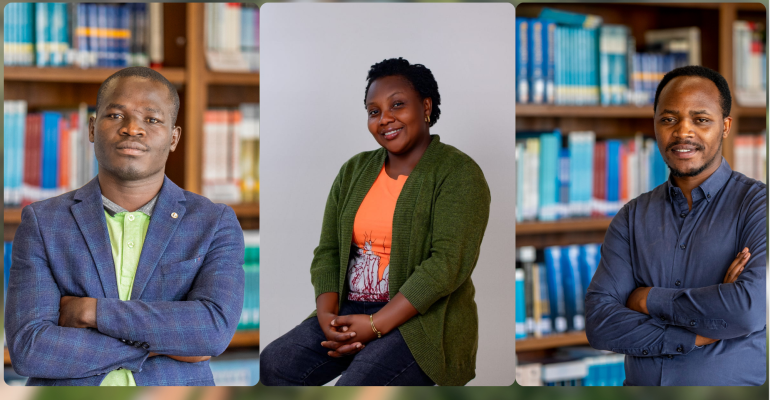
At the University of Global Health Equity (UGHE), three Mastercard Foundation Scholars are answering that question through their own lives. Their stories are different in detail but bound by a common thread: the belief that lived experience, when paired with the right opportunity, can become a powerful force for change.
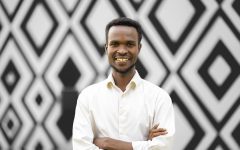
Samuel: From a Community He Loves, to Research That Could Change Policy
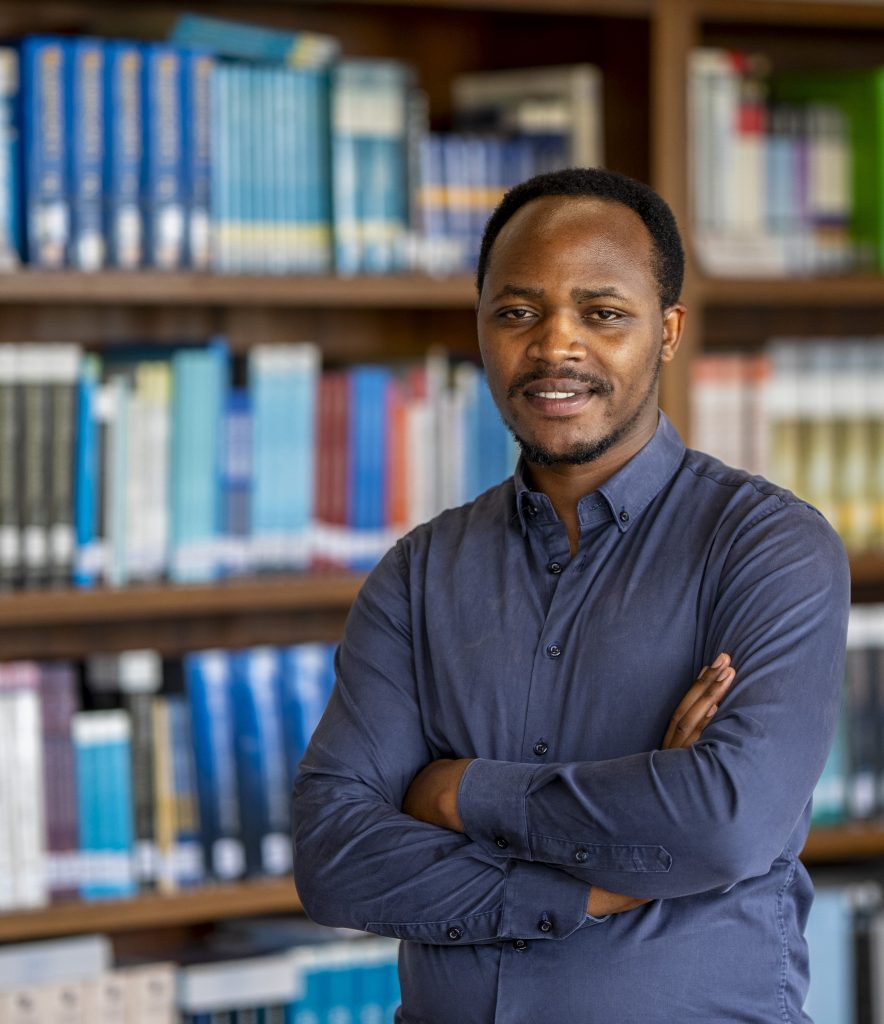
Samuel Niyomuremyi, a Mastercard Foundation Scholar at UGHE’s Master of Science in Global Health Delivery (MGHD), One Health Option, grew up watching people he cared about navigate a healthcare system that was not built for them.
Many of his relatives and friends live with albinism. From a young age, he saw how stigma, poverty, and limited access to care combined to make their lives harder. Some had to choose between eating and seeking treatment. Others worked long hours under the sun, knowing the health risk, because they had no other option.
“Some told me they would rather endure disease than hunger.” Samuel says.
Those words never left him. Before coming to UGHE, Samuel co-founded Ubuzima Innovation Hub and worked alongside the Rwanda Albinism Network. He was already doing the work. What he needed was a deeper framework to do it better.
At UGHE, Samuel gained the systems-thinking and research skills to translate personal conviction into evidence. He put that to use quickly. Drawing on intersectionality theory and the equity-centred approach that defines his programme, he co-authored a published article, examining the sexual and reproductive health barriers facing young women with albinism in Rwanda. The research found that these women face a triple burden of overlapping stigma tied to gender, disability, and albinism-specific myths, yet their health needs remain largely invisible in research, policy, and practice. Before this work, no published study had examined this population specifically.
That is the kind of gap Samuel is now trained to find and fill.
He has also carried that learning into the field. Together with fellow Mastercard Foundation Scholars, he coordinated a community outreach initiative in Musanze District, Northern Rwanda, combining health service delivery with conversations on mental wellbeing. He is currently conducting a Needs Assessment on barriers to healthcare access for people with albinism. And as Overall Mastercard Foundation Scholars Representative, he is helping build the kind of peer leadership that multiplies impact beyond any single project.
Samuel is not just studying global health. He is reshaping how it sees his community.
Marie Louise: Proof That the Right Door, Once Opened, Changes Everything
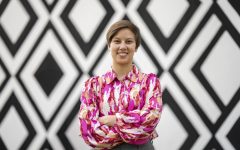
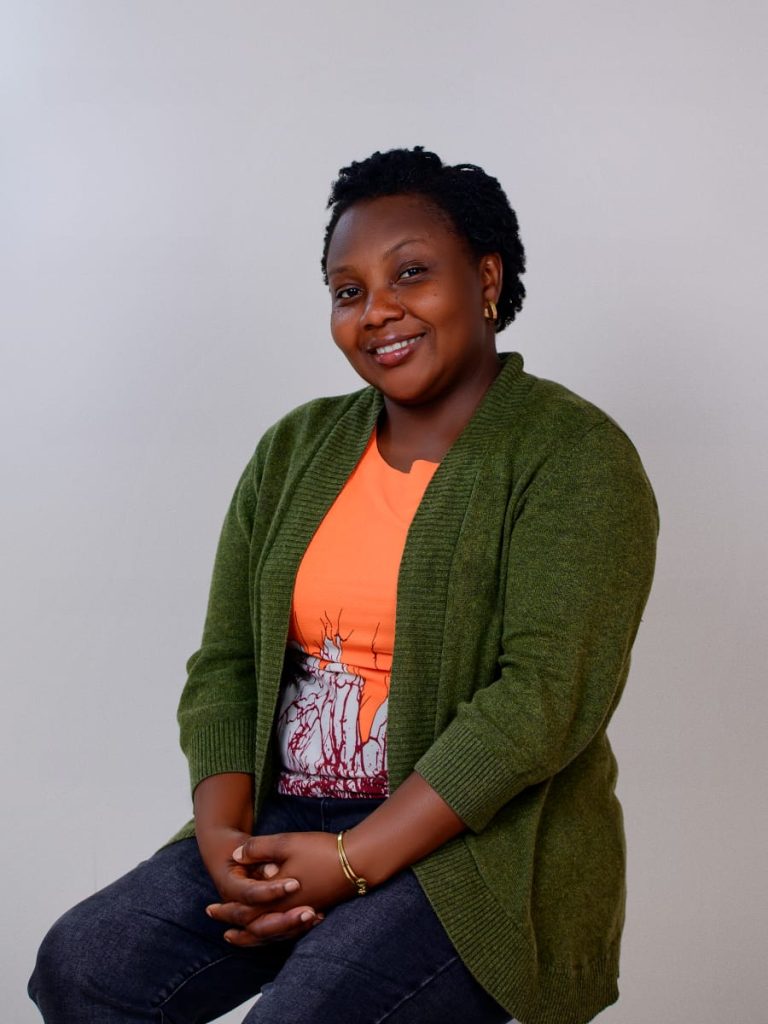
When Louise Marie Ikundabayo told people she wanted to apply to UGHE, they discouraged her.
“People told me not to waste my time. That such a prestigious university is for wealthy people.”
As a young woman living with disabilities, she had spent years navigating systems that were not designed for her. But she had also spent those years proving people wrong. She completed her undergraduate studies. She built clinical experience in a hospital. She applied anyway.
At UGHE, the admissions process is built on a different set of questions. Not what advantages has this person had, but what have they done despite the barriers they have faced, and what might they do with the chance to go further.
Louise Marie was shortlisted. She met every requirement. She earned a full Mastercard Foundation Scholar Program scholarship to the Health Professions Education (HPE) programme, which prepares healthcare professionals to become educators, curriculum leaders, and institutional reformers positioned to lead change at national and regional levels.
Today, she is not just studying. She is training to shape the systems that will teach the next generation of African health workers. Her presence at UGHE challenges a long-standing assumption about who belongs in those rooms. Her work will challenge it long after she leaves.
Okullo: When the Right Support Arrives, Everything Changes
Christopher Oneka Okullo came to UGHE to study One Health. He came with ambition and ability. He also came with a challenge he had quietly carried for years.
Living with hearing impairment, he often struggled to follow lectures fully. In a demanding academic environment, that gap was constant.
“Imagine being in a class where you cannot hear everything, yet you are expected to compete at the same level.”
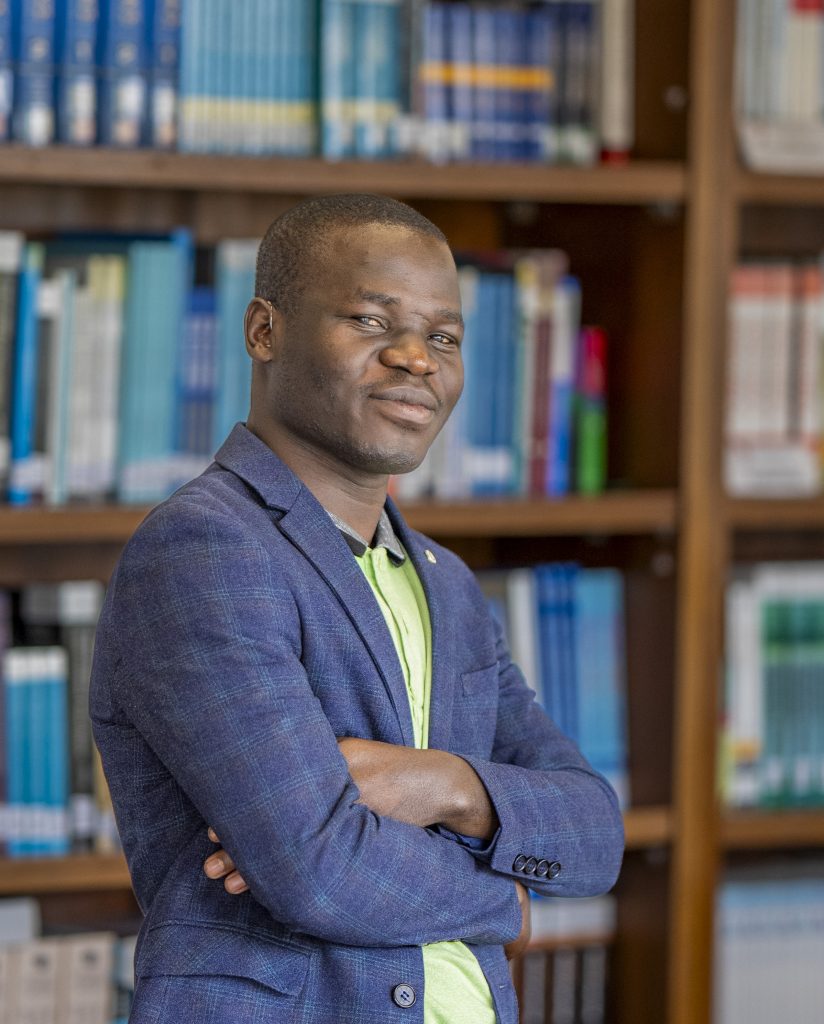
He did not ask for help at first. Like many students who have faced both disability and financial hardship, he worried about being a burden. Through the Mastercard Foundation Scholars Program, UGHE identified the support he needed. He was referred for a clinical assessment, and arrangements were made to ensure he received hearing aids.
“Now I can hear everything in class.”
That sentence holds more than it might seem. It is the difference between participation and exclusion. Between contributing and falling behind. The programme provides financial support alongside additional services designed to foster personal growth and social mobility, recognising that a scholarship alone is not enough if the conditions around a student work against them.
Okullo’s One Health training equips him to address health challenges at the intersection of human, animal, and environmental systems. It is demanding, interdisciplinary work. And he is doing it, fully, because someone made sure the conditions were right for him to succeed.
More Than a Scholarship
Samuel, Louise Marie, and Okullo each arrived at UGHE shaped by the world as it is. They are leaving equipped to help build the world as it should be.
The Mastercard Foundation Scholars Program at UGHE was designed for young Africans facing the highest social and economic barriers, including young women, refugees, and persons with disabilities. What these three scholars show is what that investment looks like in practice. Not just access. Not just a degree. But a generation of health leaders who know exactly why this work matters, because they have lived it.