Full recovery from trauma is not only about surviving the injury
August 24, 2026 2026-10-01 0:39Full recovery from trauma is not only about surviving the injury
Trauma can change a life in seconds. A road crash, a fall, a burn, or a serious injury can move a person from normal life into urgent medical care, long recovery, and sometimes lasting disability. For Dr. Eric Twizeyimana, a UGHE, MGHD alumnus, whose work now connects clinical care, global health, research, and trauma science, trauma is not only an emergency-room issue. It is a wider health systems challenge that requires prevention, timely care, rehabilitation, policy, and equity.
In this Q&A, Dr. Twizeyimana explains what trauma means, when injuries should be treated as emergencies, why recovery goes beyond survival, and how UGHE and its partners are contributing to a stronger trauma systems in Rwanda and beyond.
For readers who hear the word often, what does trauma mean in medical terms?
In medical terms, trauma refers to an injury caused by a force that damages the body structure and function and requires medical attention. It can be intentional or unintentional, physical, or psychological. It also ranges from minor injuries (small wounds or cuts, etc.) to life-threatening conditions (brain injuries, chest and abdominal injuries, severe burn injuries, etc.) that affect several parts of the body at once.
Clinicians often talk about two broad types of trauma. The first is blunt trauma, which happens when the body is hit by something without the skin being penetrated. This can happen during road traffic crashes, falls, sports injuries, or assaults. The second is penetrating trauma, which happens when an object breaks through the skin and enters the body, such as a sharp object.
Trauma can also be classified by the part of the body affected. This includes head and brain injuries, chest injuries, abdominal injuries, spinal injuries, burns, and injuries to bones, muscles, and joints.
In Rwanda and in many low- and middle-income countries (LMICs), road traffic injuries are among the leading causes of trauma. They often affect young adults and people in their most productive years. This means trauma is not only a clinical condition. It is also a social and economic challenge.
Why should trauma be seen as more than an emergency room issue?
Trauma should be seen as a global health and health systems issue because its impact goes far beyond the first moments of emergency care.
Globally, injuries cause millions of deaths and disabilities every year. Many of these deaths happen in LMICs, where people may face delays in reaching timely and quality trauma care. But even when a person survives, trauma can lead to long-term disability, loss of income, financial hardship for families, and added pressure on health systems.
To respond to this problem, trauma care must cover the whole continuum. It starts with prevention, including road safety, workplace safety, violence prevention, and community education. It also requires strong pre-hospital care, such as emergency medical services and rapid transport. Hospitals must have trained teams, well-equipped emergency departments, and surgical capacity. Additionally, patients need rehabilitation and support to return to school, work, family life, and their communities.
When should an injury be treated as an emergency?
An injury should be treated as an emergency whenever it may threaten life, limb, or long-term function.
There are warning signs people should never ignore. These include loss of consciousness, confusion, difficulty breathing, severe bleeding, chest pain after an injury, severe abdominal pain, inability to move a limb, seizures, repeated vomiting after a head injury, suspected spinal injury, major burns, severe swelling or deformity of a limb, or any injury caused by a major crash or a fall from height.
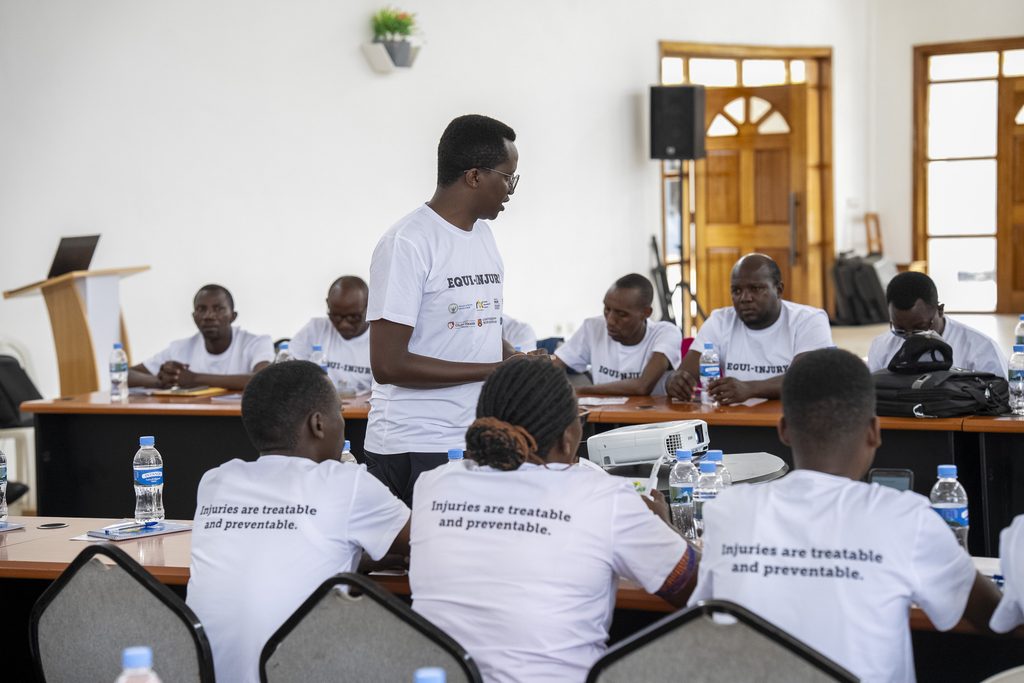
One of the most important messages in trauma care is that time saves lives. Delays in seeking care or reaching the right facility can make outcomes much worse. Research from initiatives such as Equi-Injury and Rwanda912 has shown that barriers like transport difficulties, financial constraints, and limited awareness often delay care-seeking after injuries in low-resource settings.
When there is uncertainty, it is always safer to seek medical care promptly rather than wait for symptoms to worsen.
What does full recovery from trauma involve?
Full recovery from trauma is not only about surviving the injury.
It includes physical recovery, such as healing, pain management, physiotherapy, and restoration of function. It also includes psychological recovery, because some patients may experience anxiety, depression, emotional distress, or trauma-related stress after injury.
Social recovery is also important. People need support to return to school, work, family responsibilities, and community life. Economic recovery matters too, because injuries can create financial pressure for patients and families.
A person may survive a severe injury, but continue to live with disability if rehabilitation services are not available. This is especially important in low-resource settings, where rehabilitation may be limited.
As someone trained in medicine, global health delivery and trauma science, I view trauma through a systems lens. Survival is only the first step. Our goal should be to help patients regain the highest possible quality of life. Rehabilitation and long-term support are not optional. They are essential parts of comprehensive trauma care.
How is UGHE contributing to trauma-related work?
UGHE contributes through various ways, including training in medical education and global surgery, research, advocacy, simulation-based training, and initiatives that focus on injury care and emergency response.
At UGHE and through the Centre for Equity in Global Surgery, there has been important work to generate evidence on injury burden and health system performance. This includes understanding barriers to injury care in low- and middle-income countries, assessing governance and policy gaps, developing tools to evaluate quality of care, and promoting locally relevant solutions that strengthen trauma and surgical capacity.
Projects such as iPrOTeCT and Equi-Injury are helping us understand how people experience injury and navigate health systems. Rwanda912 also has the potential to strengthen emergency response systems and improve timely access to care.
I also had the opportunity to contribute to research on trauma surge capacity in Rwandan hospitals. This work highlighted strengths in the system, as well as areas that need further investment. These studies provide evidence that can guide policy, planning, and resource allocation.
The biggest opportunity ahead is to build integrated trauma systems. These systems should connect prevention, pre-hospital care, hospital services, rehabilitation, research, and policy. Rwanda has already made remarkable progress in health system strengthening. With continued investment in trauma systems, implementation science, and local research leadership, it has the potential to become a regional model for equitable injury care.
What first drew you to trauma science?
My interest in trauma grew from both my clinical experience and my global health training.
As a general practitioner, I cared for many patients injured in road traffic crashes, falls, and other traumatic events. I saw how an injury can suddenly change the course of someone’s life. I also saw that outcomes are shaped not only by the injury itself, but by the strength of the health system around that person.
My Master of Science in Global Health Delivery (MGHD) at UGHE helped me think beyond individual patients. It taught me to look at equity, access, health system performance, and wider conditions that shape health outcomes. Through research and advocacy in global surgery, I became more interested in why so many injury-related deaths and disabilities are preventable.
Pursuing an MSc in Trauma Science at the University of Birmingham allowed me to bring together clinical medicine, public health, research, and systems thinking. Trauma science sits at the intersection of all these fields.
What motivates me most is the chance to contribute to stronger and more equitable trauma systems, especially in low- and middle-income countries. Every person, regardless of where they live, deserves timely, high-quality trauma care and the opportunity to recover fully after injury.
My goal is to contribute through research, education, health policy, and advocacy to help make that vision a reality.