Butaro Dialogues: UGHE and Partners Call for Innovation That Reaches Those Who Need It Most
July 27, 2026 2026-10-01 0:39Butaro Dialogues: UGHE and Partners Call for Innovation That Reaches Those Who Need It Most
Butaro Dialogues: UGHE and Partners Call for Innovation That Reaches Those Who Need It Most
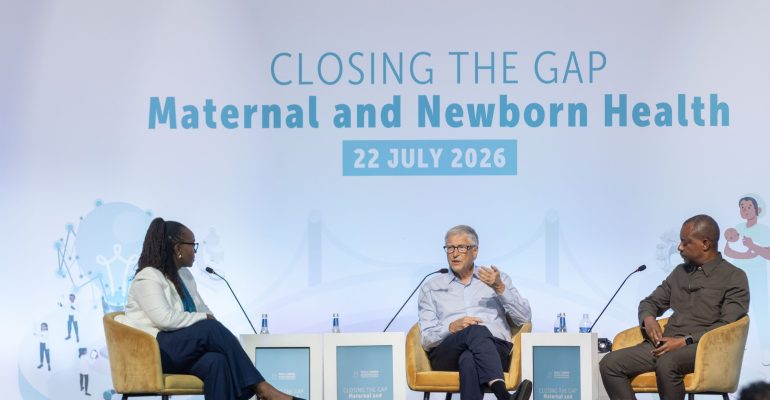
On 22 July 2026, UGHE hosted the inaugural Paul E. Farmer Butaro Dialogues on Health Equity and Innovation at its Butaro Campus in Burera District, Northern Rwanda.
This high-level convening was organized in partnership with the Consortium of Medical Schools in Africa (COMS-A). It brought together government leaders, global health partners, students, health practitioners, and academic leaders for a timely conversation on maternal and newborn health, innovation, and equitable access.
The Butaro Dialogues were created to address one central question: how can proven health innovations move faster from discovery to implementation, and ultimately reach the people and communities they were designed to serve?
Opening the event, UGHE Vice Chancellor Prof. Phil Cotton reflected on the urgency of the global health mission and reminded participants that the work of preventing avoidable deaths requires continued commitment.
“The dying does not end, and our task certainly does not.” Prof. Phil Cotton urges.
The setting of Butaro carries deep meaning. As Prof. Abebe Bekele, UGHE Deputy Vice Chancellor for Academic and Research Affairs, and the COMS-A Secretary General, noted in his remarks, Butaro represents an idea that Dr. Paul Farmer spent his life demonstrating: that the highest standards of education, research, and clinical care should exist alongside the communities that need them most.
For UGHE, the Dialogues are not simply an event. They are an extension of the University’s founding mission: to connect education, research, service, and partnership to the realities of patients, families, and communities. They also carry forward the legacy of Dr. Paul Farmer, known in Rwanda as Muganga Mwiza, “Good Doctor”, whose work showed that excellence and equity are inseparable.
In his Lecture, the Guest Speaker, Mr. Bill Gates reflected on Dr. Paul Farmer’s legacy and the enduring spirit of Butaro. He recalled his personal journey with Paul, including visits to health facilities such as Rwinkwavu Hospital, and described UGHE as a testament to what Paul believed was possible. He also noted that while he deeply misses Paul, it is comforting to see his legacy continue in Butaro.
Mr. Gates commended Rwanda’s remarkable progress in reducing child mortality and maternal deaths, and recognized the country’s leadership in healthcare innovation. He emphasized that the challenge before the global health community is not a lack of knowledge alone, but the need to work together to ensure that available tools, technologies, and innovations reach those who need them most.
“It is not a mystery what we need to do. We understand the challenge, and we have the tools to act,” he said.
The discussions also focused on the role of emerging technologies, including artificial intelligence, in strengthening health systems. Mr. Gates warned that advanced technologies risk becoming concentrated in wealthier countries if equity is not placed at the centre of their design and implementation.
“AI should not only be available to those who already have access; we should bring AI to those who need it most,” he emphasized.
This message echoed the broader purpose of the Dialogues: to move from innovation to implementation. As Prof. Abebe noted, scientific advances, digital health, diagnostics, artificial intelligence, and clinical innovation continue to expand what medicine can achieve, yet many of these advances remain distant for millions of people.
H.E. Mrs. Jeannette Kagame, First Lady of the Republic of Rwanda, who was the event’s Guest of Honor, emphasized that the solutions to prevent maternal deaths already exist. The challenge is ensuring that they are delivered with quality, equity, and urgency to every mother and newborn who needs them.
“When a woman dies while giving life, it’s a dark reminder that, somewhere, a health system failed to deliver what is already possible. This is a flaw in focus. This is a moral failure. But it’s a moral failure we can correct.” H.E. Mrs. Jeannette Kagame states.
As Rwanda continues to advance maternal and newborn health, the health sector still needs stronger systems, better delivery, and collective responsibility to ensure that no life is lost to preventable causes.
The inaugural Dialogues were convened by UGHE and COMS-A. The platform aims to identify promising maternal and newborn health innovations, embed them in medical education, and support governments in adopting them at scale.
COMS-A’s network of 191 medical schools in 37 countries was highlighted as a powerful mechanism for scale. Through this network, proven innovations can reach not only individual hospitals, but a generation of health professionals trained across Africa.
Throughout the day, speakers and participants explored how education, research, implementation, and policy can work together to close gaps in maternal and newborn health. The conversations emphasized the importance of partnerships between governments, universities, funders, innovators, and health systems.
The presence of H.E. Mrs. Jeannette Kagame, Mr. Bill Gates, and key partners reinforced the national and global importance of the conversation. It also affirmed Rwanda’s continued leadership in advancing health equity and creating space for bold, practical solutions rooted in community needs.
The inaugural Paul E. Farmer Butaro Dialogues ended with a shared conviction that innovation matters only when it improves the lives of the people it is designed to serve. For UGHE and its partners, the Dialogues represent not only a conversation, but a renewed promise to mothers, newborns, families, and communities who continue to face preventable barriers to health and survival.