Advancing Healthcare Simulation Through Collaboration
November 24, 2026 2026-11-24 22:33Advancing Healthcare Simulation Through Collaboration
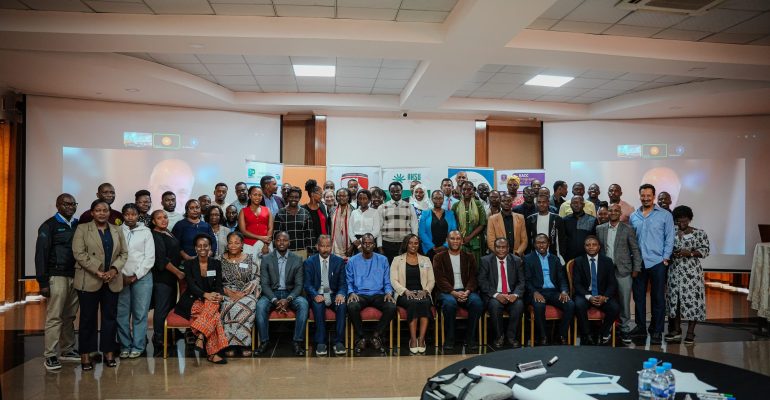
On October 30, 2026, the Rwanda Simulation Health Equity (SHE) Network was officially launched, bringing together more than 20 universities, hospitals, and professional associations to strengthen healthcare simulation across the country. The Network grew out of a collaboration that began in 2022, when the University of Rwanda approached UGHE for support in training staff to use high-fidelity simulation equipment. What started as a request for technical support revealed a broader need for shared knowledge, stronger institutional capacity, and greater collaboration.
In this Q&A, Dr. Ornella Masimbi, Head of Simulation, XR/VR at UGHE’s Center for Transformative Learning Technologies (CTLT) at UGHE, and the Secretary of the SHE Network, takes us through the journey behind the Network, the vision driving it, and its potential to advance healthcare education and patient safety in Rwanda.
In 2022, the University of Rwanda asked UGHE to help train staff to use a high-fidelity manikin that had sat unused for two years. When your teams began visiting each other’s simulation centers, what did you discover that made you realize the challenge was shared across Rwanda?
It started with a simple email in May 2022 from the then Acting Director of the University of Rwanda Skills Lab. They had a high-fidelity birthing manikin called Mama Victoria that had remained unused for two years, and they asked whether UGHE could help train their team.
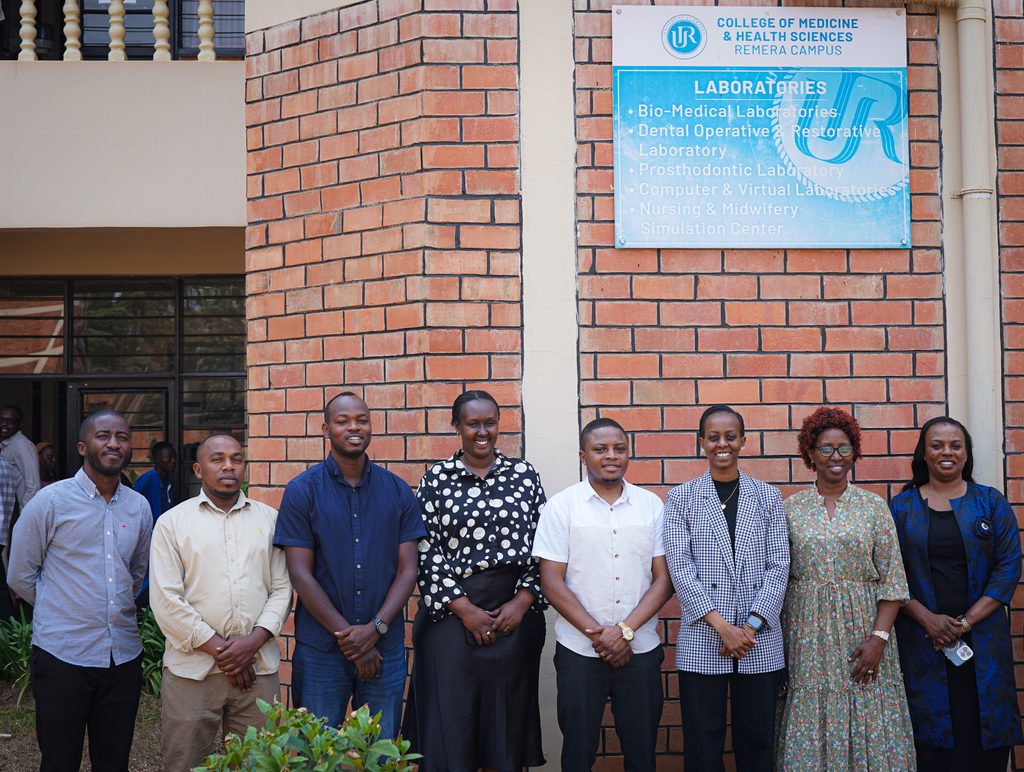
What surprised us was that we didn’t even know other institutions in Rwanda had high-fidelity simulation manikins. We knew there were skills labs, but we weren’t aware of the equipment and expertise available in different institutions. That request encouraged us to start visiting each other’s simulation centers. As we visited UR, Partners In Health, and other institutions, we realized that Rwanda already had simulation resources and dedicated professionals doing interesting work, but many of us were working separately. Some centers had equipment but lacked trained instructors or technicians. Others had experienced staff but limited resources. We discovered that we were facing many of the same challenges without knowing what other institutions were doing.
That’s when we started thinking: rather than each institution trying to solve these problems alone, why don’t we bring everyone together, share what we have, and learn from one another?
What did the early partners bring to the collaboration, and was there a moment when you realized it could grow into a national network? Take us from those first exchanges to the launch on 30 October 2026, with more than 20 institutions involved.
Each institution brought something different. The University of Rwanda helped start the conversation, UGHE contributed its experience in simulation education and faculty development, and other universities and hospitals brought their own expertise, resources, and challenges.
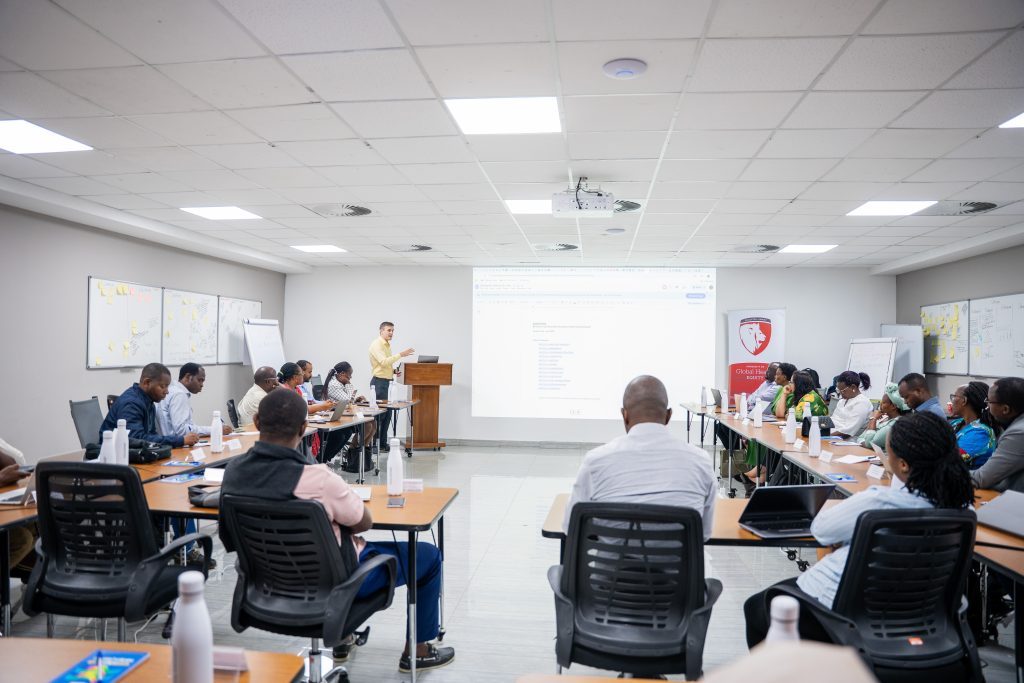
In August 2023, UGHE hosted our first national meeting on healthcare simulation in Rwanda. We brought together representatives from eight institutions, including UR, King Faisal Hospital, CHUK, Partners In Health, ASOME, and Rwanda Military Hospital. I think that meeting was an important turning point because everyone agreed that we could achieve much more by working together.
In 2024, we formed working groups to help us focus on different priorities, including how the Network would operate, partnerships between institutions, improving simulation teaching and assessment, mobilizing resources, and supporting research and innovation.
In 2025, we started developing the bylaws and governance structure. Throughout those years, we continued visiting institutions, sharing training opportunities, organizing webinars, and supporting one another. Progress was sometimes slow because most of us were doing this alongside our regular jobs, without dedicated funding. But people remained committed.
On October 30, 2026, we finally held our first General Assembly and officially launched the Rwanda Simulation Health Equity Network, bringing together more than 20 institutions. Seeing all these institutions come together after four years of collaboration was really special. What started as a simple request for technical support had grown into a national Network with a shared purpose.
What did you learn from working with different universities and hospitals, and how did these exchanges shape the purpose of the Rwanda SHE Network?
One thing we learned is that having a simulation center doesn’t automatically mean that simulation is being used effectively.
During our visits and discussions, apart from the shortage of trained/experienced educators and suitable equipment in some institutions, we also realized that simulation is not just about buying manikins. You need people who know how to use them, faculty who can design and facilitate learning, technicians who can maintain the equipment, and institutions that are willing to invest in regular training.
These discussions helped us identify the main areas where the Network could make a difference: training and mentorship, sharing resources, developing common standards, supporting research, and improving collaboration between institutions. We wanted to create a platform where people could easily reach out to colleagues, share what they know, and find support without having to start everything from scratch.
How is UGHE’s Simulation Centre already supporting educators, students and health workers from other institutions? If a hospital or university wants to start or strengthen its own simulation training, what support can it access through the Network?
At UGHE, simulation has been part of our medical education program since 2019. We use it to teach clinical skills, teamwork, communication, and the management of emergencies.
Beyond our own students, we have been running simulation instructor courses and training programs for educators and healthcare workers from other institutions. Over the years, we have trained more than 300 healthcare professionals in simulation instruction across Rwanda and Zanzibar.
We have also worked with hospitals to introduce simulation directly into the clinical environment. For example, at Gisenyi, Byumba, and Kabgayi hospitals, we trained 21 local instructors from different professional backgrounds. They are now leading regular simulation sessions with their own teams, focusing on maternal and newborn emergencies. We have also welcomed colleagues from other universities and hospitals to our simulation courses, organised institutional visits, and shared teaching and technical expertise.
Through the SHE Network, we hope to make this type of support more accessible and better coordinated. An institution that needs help training instructors, setting up a simulation program, maintaining equipment, or connecting with experienced colleagues should be able to find that support within the Network. Importantly, it won’t be only UGHE providing that support. Other institutions have valuable experience to share, and that is what makes this collaboration exciting.
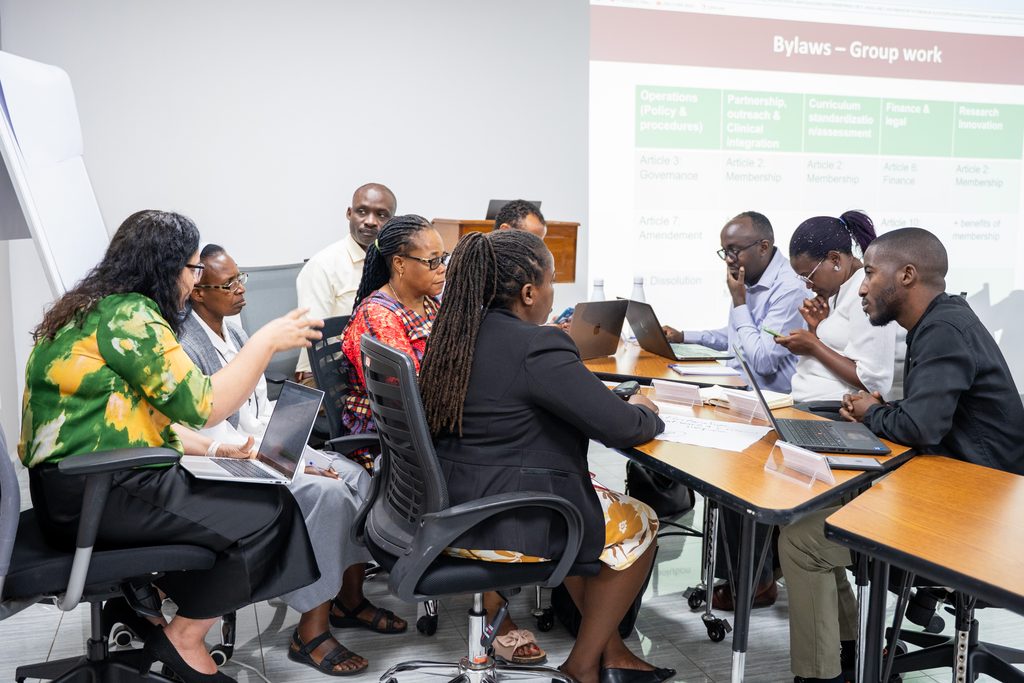
What will the Network do first to expand access to simulation training, especially for institutions with limited equipment or few trained facilitators? How will you know whether that training is making care safer for patients?
Our priority is to strengthen the people delivering simulation training. Equipment is important, but even simple, low-cost simulation models can be very useful when you have well-trained instructors.
At our first General Assembly, members identified several priorities, including instructor development, technical training, equipment maintenance, common standards, and better sharing of resources.
We want to organize joint training activities, support mentorship between institutions, and explore ways centres with more resources to support those that are still developing. We are also interested in locally developed, low-cost simulation models, because not every institution can afford expensive manikins.
Measuring the impact will be just as important. We shouldn’t only count how many people attend our courses. We need to assess what they learn, whether they can demonstrate the skills, and whether they are using simulation when they return to their institutions.
In hospitals, we will also look at how simulation helps teams identify gaps in their processes, improve communication, and practice emergency responses. Over time, we hope to work with institutions to connect these improvements to patient safety and quality-of-care indicators.
We know that training alone does not prove that patient outcomes have improved, so building that evidence will be part of our work.
What would you like to see the Rwanda Simulation Health Equity Network achieve over the next few years, and where could new institutional partners, development partners and funders make the biggest contribution?
I would love to see Rwandan healthcare workers and students accessing good-quality simulation training, regardless of which institution they belong to or where they are based.
Over the next few years, I hope we can build a strong community of simulation instructors, technicians, researchers, and healthcare professionals who regularly work together.
We would like to see more institutions offering simulation training, better use of the equipment that already exists, stronger technical support, and common approaches to quality and assessment. I would also like us to develop more local research and share the lessons coming from our own healthcare settings.
For partners and funders, I think the biggest opportunities are faculty development, technical training, mentorship, equipment maintenance, and supporting institutions with limited resources. We also need support to build the Network’s capacity to coordinate these activities and sustain the collaboration.
What encourages me most is that we are not starting from zero. There are already committed people and institutions across Rwanda doing important work. The Network gives us an opportunity to connect those efforts and achieve much more together.
Looking Ahead: The journey has begun, and there is room for more partners to be part of it.
The launch of the Rwanda Simulation Health Equity (SHE) Network marks an important step toward building a stronger, more connected healthcare simulation ecosystem in Rwanda. But its success will depend on continued collaboration and the active participation of institutions, professionals, educators, and partners committed to advancing simulation-based learning and improving patient care.
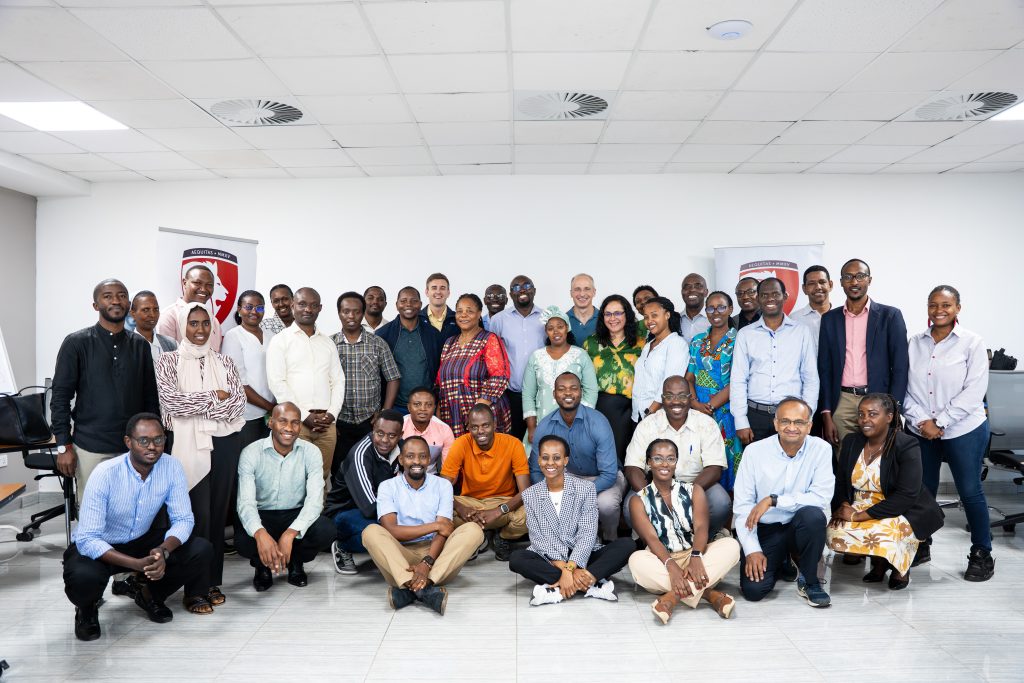
The Network welcomes universities, hospitals, healthcare professionals, simulation educators, and other interested partners to join its efforts. Its Secretariat is hosted by UGHE at Kigali Heights in Kigali, Rwanda. Those interested in becoming members or exploring opportunities for collaboration can reach out via rshenetworksecretariat@ughe.org.
The Network is guided by an elected founding Executive Committee comprising:
- President: Dr. Marie Grace Sandra Musabwasoni; Professor of Nursing and Midwifery, University of Rwanda.
- Vice President: Abel Mpirwa; Midwife Educator, East African Christian College.
- Secretary: Dr. Ornella Masimbi; University of Global Health Equity (UGHE).
- Treasurer: Elias Kagabo; Biomedical Engineer, Partners In Health (PIH) and Butaro Level 2 Teaching Hospital.
With a shared commitment to knowledge exchange, capacity building, and institutional collaboration, the Rwanda SHE Network aims to ensure that healthcare simulation becomes more accessible, sustainable, and impactful across the country.